


Tips on how to easily create indirect lighting in the kitchen
Indirect lighting makes it easy to create different atmospheres in a space, from bright task lighting to soft evening lighting. The idea of indirect lighting is to place hidden light elements in the space using profiles, wall or ceiling structures, or kitchen furniture. One of the easiest ways is to install lighting in existing furniture, making it possible to add indirect lighting even afterwards.
Indirect lighting is created when light is reflected into the room via another surface. The light should be soft and pleasant without causing glare. It is important to plan and position lighting elements so that the actual light source remains hidden from view. It is also often useful to test the direction and angle of the light to avoid harsh, spot-like or glaring light patches.
Indirect lighting can serve as the only light source in a space, for example when the light runs around the entire room. More often, however, it complements general and task lighting. If indirect lighting is used as the main lighting source, it is important to ensure that the light output is sufficient when brighter lighting is needed.
Indirect light sources in the kitchen
There are several places in the kitchen where indirect lighting can be used effectively. Easy and visually appealing locations include the underside of the countertop, the plinth, and the space above the wall cabinets. These areas help add atmosphere and visual interest to the space.
In the kitchen it is important to ensure that general lighting is sufficient and that the worktop has adequate task lighting for safe cooking. Indirect light sources complement the lighting design by adding depth and atmosphere to the space.
Indirect lighting makes it easy to adjust the mood of the lighting, as it is softer than general and task lighting. The light reflects through different surfaces, creating a pleasant and even illumination. Indirect lighting is often connected to a separate switch so that it can be used depending on the situation.
It is also important to note that in bathrooms and other wet areas, luminaires used for indirect lighting should have an IP rating of at least IP44.
Indirect lighting – above wall cabinets
A light fixture placed above the kitchen wall cabinets is one of the easiest ways to implement indirect lighting. The luminaire is installed on top of the cabinet so that the light source itself remains hidden and only the reflected light is visible in the room. The light should be directed diagonally forward and towards the ceiling. When installed correctly, the light reflects softly from the ceiling into the room and is pleasant to look at. Light patterns on end walls can be reduced by starting the luminaires approximately 30–50 cm away from the side walls.
Various indirect light sources and lighting profiles can be installed above the wall cabinets. For example, the Corner profile can be installed directly in the rear corner of the cabinets, directing light diagonally upward. The luminaire is available in IP20 and IP44 versions, making it suitable also for humid environments. The profile can be cut to the desired length, and its aluminium, black or white finishes match well with different cabinet materials. A tunable white version of the Corner light is also available, allowing the colour temperature of the indirect light to match the kitchen lighting.
The recessed Grade profile luminaire has a built-in angled beam direction, so the light angle does not need to be adjusted separately. The profile is ideal for installations where the luminaire should blend seamlessly into the furniture.
Indirect lighting in the plinth
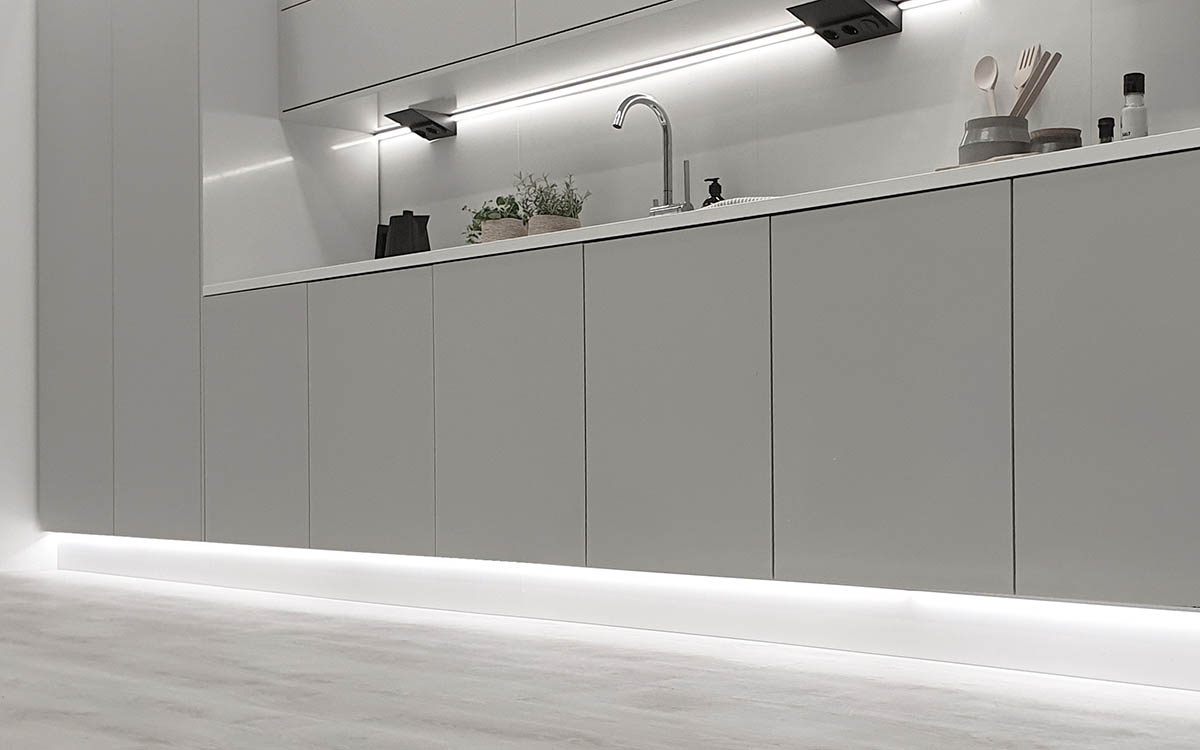
Linea light profile or the lower-output Pro Lite LED strip is an easy way to create lighting in the plinth. The profile or strip is mounted to the underside of the base cabinet in front of the plinth so that the light reflects from the floor back into the room. The colour and material of the plinth and floor affect how the light appears: dark surfaces reflect light more softly than light-coloured or glossy surfaces.
Plinth lighting also works well as a night light. The low light reflected onto the floor softly illuminates the pathway without glare. Automatic control can also be connected to the plinth lighting so that the light turns on when entering the space and switches off automatically after a set time.
Indirect lighting – under the countertop or in kitchen shelves
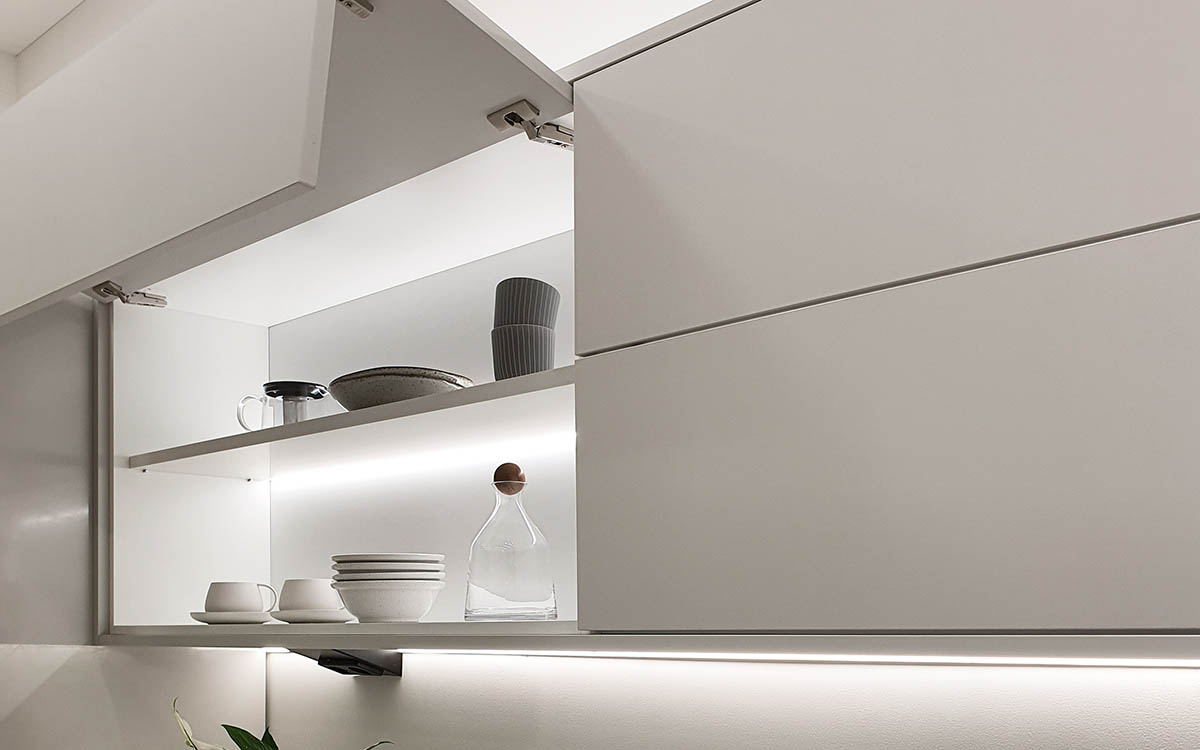
Lighting highlights shelves beautifully, whether they are open shelves or shelves inside cabinets. Indirect lighting adds visual interest to shelves and showcases objects elegantly.
One of our newest luminaires, Led-Seam, has been designed specifically for shelf lighting and has quickly gained popularity among interior designers. This profile luminaire can be installed at the front or back edge of a shelf and features LED strips facing both upwards and downwards, allowing the shelf to be illuminated in two directions with a discreet profile. You can read more about using the Led-Seam profile here >.
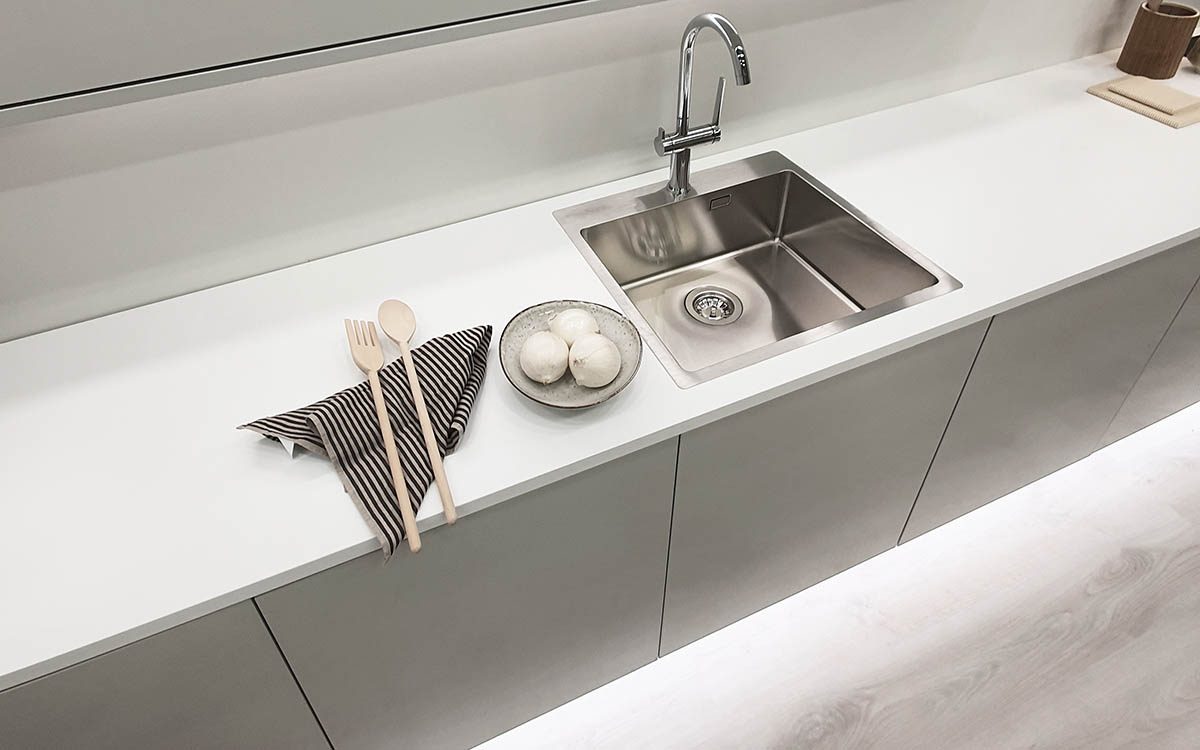
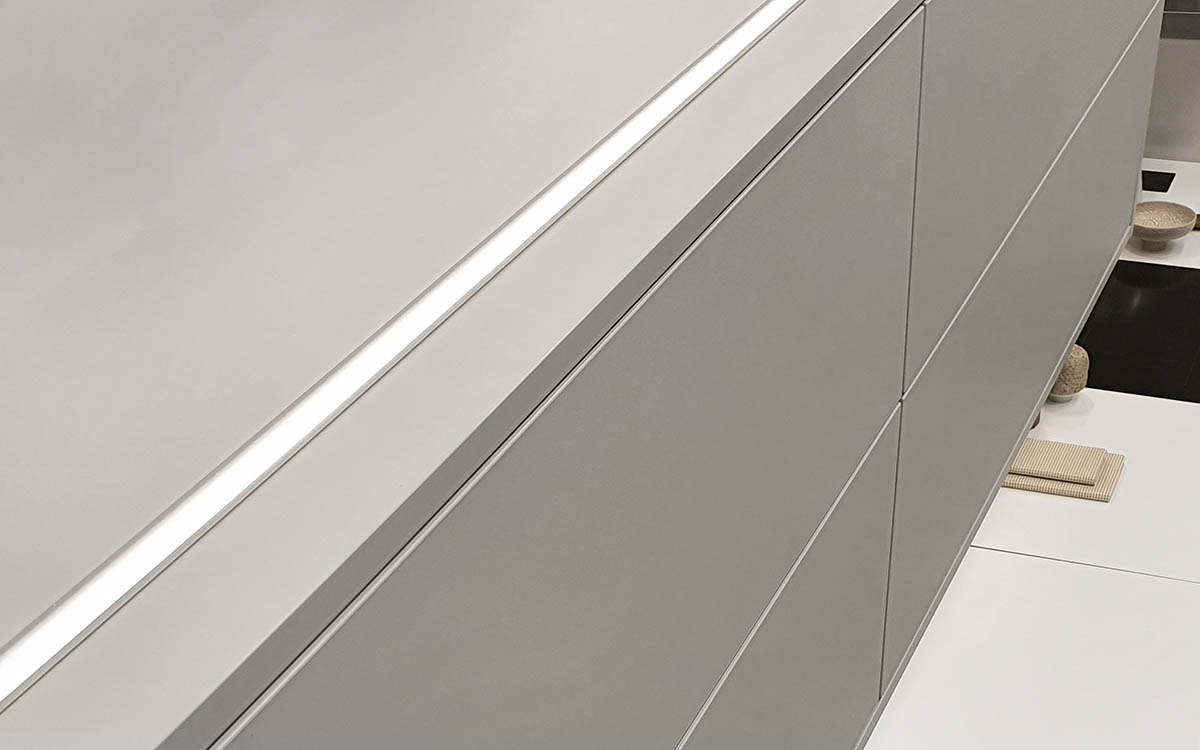
The underside of the countertop is a stylish place to add indirect lighting to the kitchen. The Pro Lite luminaire is discreet and only 5 mm high, making it easy to integrate into the cabinetry design. The Pro Lite LED strip can be attached directly to the underside of the countertop or recessed into a groove made in the surface. Lighting installed under the countertop also illuminates the contents of drawers when they are open and works beautifully as ambient or night lighting.
Indirect lighting can be implemented using many different lighting profiles and LED strips. In the kitchen there are several possible locations for indirect lighting, so it is worth taking time to carefully plan the placement and lighting control. The most important rule is that the light should not cause glare.
Keep these points in mind when planning indirect lighting:
- the luminaire itself should not be directly visible
- the direction of the light should not cause glare
- use the same LED strip in lights that are on simultaneously to ensure consistent lighting
- 3000 K works well for ambient lighting and 4000 K for task lighting
- lighting should be connected to a separate switch